
 Bengali foods
 Best Mughlai
 Biryani
 Carrot Juice
 Chaat
Chaat Cheese Burger
 Chinese
 Cold Coffee
 Continental
 Cupcake
 Dessert
 Dinner
 Doughnut
 Drum Stick
 Fast Food
 Fresh Juice
 Gujarati Foods
 Homemade Meals
 Homemade Sweets
 Hot Dogs
 Ice Cream
 Indian Foods
 Italian
 Kebabs
 Lunch
Lunch Magi
Magi Noodles
 North Indian
 Pastry
 Pizza
Pizza Potato Fries
 Prawns
 Punjabi
 Salad
Salad Sham pane
 Shawarma
 South Indian
 Stakes
 Tandoor
 Tea
Tea Thai
Thai
Posted by Reviewtale
- Sep 20, 2025
- 363
- 1
5 Proven Ways Reviews Can Boost Your Restaurant's Foot Traffic (2025)
Introduction: The Power of Reviews in Modern Dining
Before we dive into the impact of restaurant reviews, it is important to first understand what a “review” really is. At its core, a review is simply a recommendation or feedback from a user, usually shared in writing. In many ways, it is the modern replacement for traditional word-of-mouth, which for decades shaped the way people discovered products and services. If reviews matter for consumer goods and services in general, it’s impossible to overlook their importance in the restaurant and food industry.
In today’s digital dining culture, reviews have become as essential as the food itself. Long before a customer steps through the doors of a restaurant or café, they’ve likely read about it online. Platforms such as Google, Yelp, and TripAdvisor have empowered every diner to act as a critic, with the ability to influence the perception—and even the fate—of a food business.
For restaurants and cafés competing in highly saturated markets, reviews are no longer just casual feedback. They are a lifeline that drives:
- Footfall – by attracting curious new customers.
- Customer loyalty – by reassuring diners about consistency and quality.
- Long-term growth – by improving online visibility and reputation.
In short, reviews are not just about opinions; they are a strategic asset that can make or break a restaurant’s success.
This article explores in depth how reviews drive footfall for restaurants and cafes, the psychology behind them, their role in digital platforms, strategies for leveraging them, and what the future holds.
From Word-of-Mouth to Online Reviews: The Evolution of Trust in Dining
For decades, word-of-mouth was the most powerful marketing tool for restaurants and cafes. Families, friends, and coworkers would share their favourite spots, and those personal recommendations carried enormous weight. A strong reputation often took years to build, and once established, it was assumed to last for generations.
However, the reality was far more complex. Over time, even popular restaurants struggled to maintain the consistency that built their fame. Staff turnover, changes in management, or lapses in service quality created gaps between customer expectations and the actual dining experience. The glowing reputation that once attracted new guests began to fade when the reality no longer matched the promise.
The challenge with traditional word-of-mouth was that it couldn’t adapt quickly. If a once-beloved restaurant declined in quality, it often took months—or even years—for word to spread. By then, many customers had already experienced disappointment, leading to frustration and mistrust. Similarly, diners new to the area had no reliable way of knowing if a restaurant’s long-standing reputation still reflected its current standards.
The Rise of Reviews as the New Word-of-Mouth
Today, the dining industry operates in an entirely new landscape. Online reviews have become the digital equivalent of personal recommendations, but with a critical advantage: they’re immediate, transparent, and widely accessible.
A single positive review does more than praise the food—it creates curiosity, credibility, and social proof. When potential customers see multiple people sharing authentic experiences, they feel reassured that their own visit will be worthwhile. This modern version of word-of-mouth is faster, broader, and often more influential than personal recommendations alone.
To explore further, check out our article: 5 Reasons Why Restaurant Reviews Are the New Word of Mouth.
Why Fresh Reviews Matter More Than Reputation Alone
Perhaps the greatest strength of review platforms is their real-time nature. Google, Yelp, and TripAdvisor all showcase recent feedback prominently, giving diners a snapshot of what the restaurant is like today. Unlike the static reputations of the past, reviews evolve constantly, reflecting the most current quality of food, service, and atmosphere.
This recency helps protect customers from outdated reputations. A restaurant that was once popular but has since declined will quickly accumulate less favourable reviews, alerting potential diners before they make a decision. On the other hand, an emerging café with excellent service can gain visibility and attract new customers much faster than it could through traditional word-of-mouth alone.
Building Trust in the Digital Era
The transition from traditional recommendations to online restaurant reviews has levelled the playing field. Diners no longer need to rely solely on old reputations or insider tips—they can access a wide pool of authentic experiences at the click of a button.
For restaurants, this shift presents both a challenge and an opportunity. The challenge lies in maintaining consistency, as every diner’s opinion contributes to the restaurant’s online image. The opportunity, however, is enormous: by delivering excellent service and encouraging customers to leave reviews, restaurants can transform everyday experiences into powerful marketing tools that drive footfall and build lasting trust.
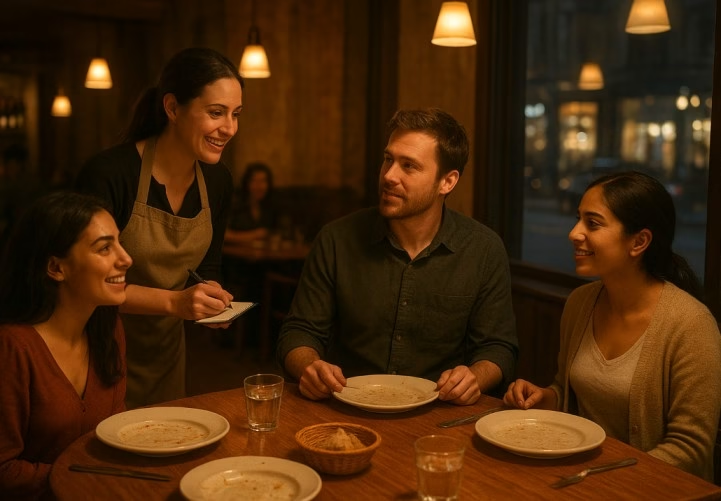
Understanding the Impact of Customer Reviews
The psychology behind online reviews
Humans are social beings. When faced with a choice of where to eat, people naturally rely on the experiences of others. Restaurant reviews act as social proof, reassuring potential customers that they’re making the right decision.
A glowing restaurant review describing a cozy atmosphere and attentive service creates an emotional pull. On the other hand, a negative review can instantly deter a potential diner, regardless of whether the complaint was minor.
How trust and credibility influence diner decisions
Customers today don’t just want good food—they want an assurance of quality and consistency. Reviews provide that trust. A restaurant with hundreds of positive reviews feels safer than a hidden gem with no online presence.
Trust signals like average star ratings, detailed comments, and management responses build confidence and encourage diners to visit in person.
The Role of Digital Platforms in Shaping Restaurant Reputation
Google reviews and local SEO for restaurants
Google is often the first stop for diners searching for their next meal. When someone types in “best café near me,” the results are dominated by Google Maps listings and customer reviews. Despite this, many restaurants underestimate the impact of reviews on local search visibility.
In reality, Google’s algorithm evaluates several key factors before ranking restaurants in local search results. The most important ones include:
- Proximity – How close the restaurant is to the person searching.
- Prominence – The overall reputation and visibility of the restaurant online.
- Reviews – Both the quality and quantity of customer feedback.
- Online Presence – Accuracy and consistency of business details across platforms.
Among these, reviews play a particularly powerful role. A higher star rating combined with recent, positive customer feedback not only improves a restaurant’s chances of ranking higher in Google search results but also increases the likelihood of attracting clicks. More clicks ultimately mean more foot traffic through the door.
For restaurants and cafés, this means reviews are not just digital compliments—they’re a critical factor in local SEO that directly influences visibility, trust, and customer visits.
Yelp, TripAdvisor, and Zomato: Industry-specific review sites
Niche platforms like Yelp in the U.S., TripAdvisor globally, and Zomato in Asia have long been recognized as influential players in the food and hospitality industry. These platforms carry significant weight because they cater directly to food lovers seeking credible, experience-driven recommendations.
In India, the landscape is even richer, with a variety of free restaurant listing sites that can significantly enhance a café or restaurant’s online presence. Platforms such as Justdial, Sulekha, AskLaila, Nearbuy, Magicpin, and Dineout not only help attract local customers but also provide valuable backlinks that strengthen search engine visibility. Having consistent and accurate listings across these platforms ensures that a restaurant’s information is always up-to-date, which boosts both credibility and discoverability.
Another emerging tool in this space is ReviewTale, which is proving to be a game-changer for restaurant owners. Unlike traditional listing platforms, ReviewTale focuses on enhancing Google My Business (GMB) optimization by encouraging authentic customer feedback, streamlining review management, and highlighting positive experiences. By leveraging ReviewTale, restaurants can improve their GMB rankings, appear more prominently in local searches, and drive higher footfall. To know more about its Google My Business Optimisation service, click here.
For restaurants and cafes, this multi-platform presence—combining global review platforms, regional listing directories, and innovative tools like ReviewTale—creates a powerful ecosystem. Together, they not only amplify visibility but also build credibility, making it easier for potential customers to trust and choose a dining destination.
Social media reviews and influencer impact
Local influencers play a powerful role in shaping customer dining decisions. Their authenticity, relatability, and highly visual storytelling often create an immediate impact, sometimes even overshadowing traditional customer reviews in the short term. Through platforms like Instagram, YouTube, and TikTok, influencers—particularly micro-influencers with niche audiences—can generate buzz that drives both foot traffic and online orders almost instantly.
However, while influencer marketing is impactful, it is often time-bound. The spike in attention usually lasts only as long as the campaign or post remains fresh in followers’ feeds. This is why restaurants that wish to leverage influencer marketing effectively should consider long-term collaborations instead of one-off promotions. Consistency in influencer advocacy builds stronger familiarity and keeps the restaurant top of mind.
That said, influencer campaigns also come with geographical and credibility limitations. Their influence typically extends only within a particular community or region, and followers may perceive sponsored promotions as less authentic. This is where traditional customer reviews hold a distinct advantage.
Unlike influencer endorsements, reviews are seen as unbiased and organic—they carry no financial obligation. General customers leave restaurant reviews based on genuine experiences, which makes them highly credible. Moreover, restaurant reviews remain visible for months or years, providing a long-term impact that continues to influence potential customers long after an influencer campaign has ended.
Professional Suggestions
- Balance both strategies – Use influencer marketing to generate short-term buzz and reviews for long-term credibility.
- Leverage micro-influencers wisely – Work with those whose audience closely matches your target demographic.
- Integrate reviews into influencer campaigns – Encourage influencers to highlight actual customer reviews in their content to build trust.
- Don’t over-rely on influencers – Maintain a strong review-generation strategy to sustain credibility and visibility beyond promotional campaigns.

How Reviews Drive Footfall for Restaurants and Cafes
Positive Restaurant reviews as digital word-of-mouth
In the past, people relied heavily on word-of-mouth recommendations to decide where to eat. Building a strong reputation often took years, and once established, that reputation was expected to carry the business forward. However, over time, many restaurants struggled to maintain the same level of quality or service. This created a gap between customer expectations and the actual dining experience.
Often, long-standing reputations became outdated. Changes in management, staff turnover, or inconsistent service made it difficult for restaurants to live up to their former image. As a result, customers who came in with high expectations based on word-of-mouth were frequently left disappointed.
Today, the landscape has shifted dramatically. Online reviews are the modern equivalent of trusted recommendations. Unlike traditional word-of-mouth, reviews provide real-time insights into food quality, service, and overall experiences. A positive review does more than compliment a meal—it builds curiosity, trust, and credibility, encouraging new customers to visit.
Negative reviews: impact and recovery strategies
One negative review doesn’t spell disaster for a restaurant. What truly matters is how the business responds. Just as a small spark can grow into a wildfire if ignored, a single negative comment can spread doubt if left unaddressed. Many restaurant owners underestimate the silent damage negative reviews can cause—discouraging potential customers who may never even give the restaurant a chance.
The good news is that, when handled well, negative reviews can actually strengthen customer trust. A thoughtful, respectful, and solution-oriented response demonstrates accountability and professionalism. It shows that the restaurant values its customers and is committed to improvement. In fact, turning criticism into an opportunity often impresses readers more than a string of generic positive reviews.
* Takeaway: Negative restaurant reviews are not the end—they are an opportunity to showcase transparency, responsibility, and a genuine dedication to customer satisfaction.
To explore further, check out our article: 5 Best Ways to Handle Negative Reviews: A Complete Guide for Restaurants.
Review quantity vs. quality: which matters more?
While a single heartfelt review can create impact, research shows that consistency and volume of restaurant reviews matter even more. Diners tend to trust restaurants with a high number of authentic restaurant reviews, even if the rating isn’t perfect. For example, a restaurant with 500 reviews and a 4.3-star rating often appears more reliable than one with only 10 reviews and a flawless 5-star score.
This is why review collection must be an ongoing process. The greater the number of reviews, the stronger the sense of familiarity and trust it creates among potential customers. A higher volume of reviews also brings stability to ratings. With fewer reviews, even one negative comment can drastically affect the overall score. In contrast, when a restaurant has hundreds of reviews, the impact of a single low rating becomes minimal.
*Takeaway: Quantity builds credibility, while consistency sustains trust.
To explore this concept further, stay tuned—our upcoming article will provide a detailed analysis of how review volume directly influences ratings and customer decisions.
The Link Between Reviews and Consumer Behaviour
How diners research before visiting
Before choosing a spot, modern diners follow a research journey:
- Search on Google or food apps.
- Compare star ratings.
- Read 3–5 detailed reviews.
- Check recent photos.
- Decide whether to book or walk in.
The role of star ratings in decision-making
According to surveys, diners are unlikely to consider restaurants with less than 3.5 stars. Each additional star rating can significantly increase foot traffic, proving that ratings are more than just numbers—they’re business drivers.
Emotional impact of authentic storytelling
In life, the more you learn about a friend—their background, stories, and experiences—the closer your bond becomes. The same principle applies in business, especially in the food and hospitality industry. Customers connect more deeply with restaurants that share their journey—whether it’s a humble beginning, years of struggle, or a story of growth and expansion. Such storytelling creates emotional ties that encourage diners to treat the restaurant like family, fostering loyalty that lasts for years.
Restaurant reviews, too, are a powerful form of storytelling. When customers share personal moments—such as celebrating a birthday, enjoying a first date, or reliving a family gathering—those stories resonate strongly with readers. Authentic narratives don’t just provide information; they inspire curiosity and action, motivating new customers to visit and create similar experiences of their own.
Restaurants should take the initiative to collect and showcase these stories. Sharing them on websites, social media pages, or business profiles not only humanizes the brand but also strengthens trust. At the same time, encouraging customers to share their own dining stories on their personal social media profiles can amplify visibility.
To make this process more effective, restaurants can offer a small token of appreciation—such as a discount, complimentary dessert, or loyalty points—in exchange for sharing experiences. This not only motivates customers to participate but also generates a ripple effect of word-of-mouth marketing in the digital age.
In the long run, storytelling—whether through business history or customer experiences—creates a community of loyal patrons who see themselves as part of the restaurant’s journey.
ReviewTale offers storytelling marketing service. To know more, click here.

Strategies for Restaurants to Leverage Reviews
Encouraging satisfied customers to leave restaurant reviews
The biggest challenge for many restaurants isn’t receiving reviews—it’s encouraging customers to write them. Happy diners often walk away satisfied but forget to share their experience online. That’s why proactive strategies are essential:
- Ask politely at the end of a meal with a friendly reminder.
- Use QR codes on receipts, menus, or table tents that link directly to Google or Yelp review pages.
- Offer small incentives like a free coffee on the next visit (without making reviews feel forced or fake).
- Train staff to casually mention reviews during peak experiences, like when serving a favourite dish or dessert.
Responding to restaurant reviews professionally
Responding to restaurant reviews is an extension of hospitality itself. Just as restaurant staff are trained to warmly welcome guests with a smile and bid them farewell with courtesy to leave a lasting impression, responding to online reviews serves the same purpose in the digital space. The underlying business objective is simple—to make customers feel valued and encourage repeat visits.
However, for busy restaurateurs juggling daily operations, it isn’t always practical to read every review, craft thoughtful responses, and remain calm under the pressure of multiple opinions. This is where ReviewTale’s Review Management Service steps in as a reliable partner.
For a minimal service fee, ReviewTale professionally manages and responds to reviews on behalf of restaurants and cafés. Each response is crafted with care, ensuring that customers feel heard, respected, and appreciated—whether the feedback is positive or critical.
It’s important to remember: a review isn’t just a single customer’s opinion—it’s a public record that hundreds, if not thousands, of potential diners will see. Responding thoughtfully isn’t just about good manners; it’s about building trust, showcasing professionalism, and shaping the long-term reputation of your restaurant.
* To explore ReviewTale’s full suite of review management features, click here and discover how you can turn every review into a growth opportunity.
- Thank positive reviewers for their time and feedback.
- Address complaints with empathy, offering to resolve issues privately.
- Keep responses short, warm, and professional—avoid defensive tones.
This two-way communication builds credibility and shows prospective customers that the restaurant cares.
Showcasing restaurant reviews on menus, websites, and ads
Why let positive reviews hide on external platforms? Restaurants can repurpose glowing testimonials:
- Display excerpts on the homepage or booking page.
- Print them on menus, table cards, or posters.
- Highlight them in social media ads and promotional campaigns.
This transforms customer voices into marketing assets, reinforcing trust while boosting footfall.
Case Studies: Restaurant Reviews That Boosted Footfall
Independent cafes vs. big chains
- Independent café in New York: A small neighbourhood café saw a 40% increase in walk-ins after encouraging loyal customers to leave Google reviews. Within six months, it climbed from 3.8 to 4.5 stars, significantly improving visibility on Google Maps.
- Global fast-food chain: While large chains already enjoy strong branding, a targeted Yelp campaign helped one franchise double weekend foot traffic by boosting local review engagement.
Examples of local SEO success
A mid-sized Italian restaurant in London optimized its Google My Business profile by:
- Uploading fresh food images weekly.
- Responding to every review within 24 hours.
- Encouraging repeat customers to leave reviews.
The result? The restaurant began ranking in the top 3 spots for “best Italian near me”, which directly translated to higher footfall.
The Future of Restaurant Reviews
AI-generated reviews and authenticity concerns
As artificial intelligence tools evolve, fake or AI-generated reviews are becoming more common. This raises trust issues, making authenticity even more important. Platforms are introducing verification systems to ensure reviews come from real diners.
Video and short-form content reviews
The next frontier in reviews isn’t just text—it’s video snippets on TikTok, Instagram Reels, and YouTube Shorts. A 30-second clip of someone tasting a latte or showcasing a restaurant’s ambiance has a much stronger emotional impact than written text.
Integration with food delivery apps
Apps like Uber Eats, DoorDash, and Deliveroo already include review systems. These not only guide delivery orders but also influence in-person visits. A restaurant with top delivery ratings often sees a spike in footfall, as online trust translates into real-world demand.

Conclusion: Turning Reviews Into Lasting Growth for Restaurants & Cafes
In today’s digital-first dining culture, restaurant reviews are more than just feedback—they are a growth engine. For restaurants and cafés, every single review has the potential to act as a magnet, attracting new customers and building long-term loyalty. Positive reviews inspire trust, visibility, and credibility, while even negative reviews—if handled with care—can be turned into opportunities to showcase professionalism and a commitment to customer satisfaction.
From Google Maps to Yelp, from TripAdvisor to social media platforms like Instagram and TikTok, restaurant reviews now define how diners make their choices. The businesses that succeed are not just the ones with great food, but the ones that embrace restaurant reviews as a central part of their marketing strategy—encouraging customer feedback, responding proactively, and highlighting their best testimonials across every channel.
This is exactly where ReviewTale becomes a game-changer. More than just a review management tool, ReviewTale helps restaurants and cafés:
- Optimize Google My Business (GMB) profiles for higher visibility in local searches.
- Collect authentic customer reviews seamlessly through smart integrations.
- Boost online reputation by showcasing positive feedback and managing critical responses.
- Strengthen SEO with powerful backlinks from niche food and hospitality directories.
- Monitor performance with easy-to-use analytics and reporting.
By partnering with ReviewTale, restaurants can transform digital feedback into consistent footfall, stronger online authority, and long-term customer trust.
- Your food deserves the spotlight. Don’t let it get lost in the noise.
- Get your restaurant listed with ReviewTale today and turn every review into a stepping stone for growth.
- The future of dining decisions is digital—make sure your restaurant is leading the conversation.
*Enlist with ReviewTale now and take the first step toward converting reviews into lasting success.
Frequently Asked Questions (FAQs)
Q1. How do reviews directly impact restaurant footfall?
Reviews act as social proof. When potential diners see positive feedback, they feel more confident about visiting, which leads to higher walk-ins.
Q2. Which review platforms matter most for restaurants?
Google reviews, Yelp, and TripAdvisor dominate, while social platforms like Instagram and TikTok play a growing role in influencing dining choices.
Q3. Do negative reviews always harm business?
Not necessarily. When handled professionally, negative reviews can show transparency and improve trust, sometimes even converting critics into loyal customers.
Q4. How many reviews does a restaurant need to see results?
Generally, restaurants with 50+ authentic reviews perform better in search visibility and customer trust than those with only a handful.
Q5. Should restaurants incentivize customers to leave reviews?
Light incentives like discounts on future visits are acceptable, but the review must remain voluntary and unbiased to stay credible.
Q6. Are video reviews more effective than text reviews?
Yes. Video reviews provide visual and emotional context, which often persuades potential diners faster than text alone.
Recommended Posts

- Feb 1, 2025
- 654 read
How Behind-the-Scenes Food Content Boosts Visibility & Engagement Table of ContentsIntroductionThe Power...
Read Article
- Jan 29, 2025
- 626 read
7 Effective Ways to Use Customer Reviews to Build Trust Table of...
Read Article
- Jan 19, 2025
- 1083 read
The Story Behind Your Business: How Sharing It Attracts Customers & Builds...
Read Article
- Jan 18, 2025
- 1160 read
Unforgettable Dining Experiences: How a Unique Selling Proposition Can Elevate Your Restaurant...
Read Article
- Jan 16, 2025
- 1932 read
What Unique Aspects of Your Restaurant, Cloud Kitchen, or Café Set You...
Read Article
- Jan 12, 2025
- 961 read
How to Remove Negative Reviews From Google? Negative reviews on Google can...
Read Article
- Dec 25, 2024
- 692 read
6 Essential Steps for Restaurants: Masterfully Choose the Right Target Customers Choosing...
Read Article
- Dec 5, 2024
- 1171 read
10 Powerful Tips for Innovative Menu Design: Trends You Need to Know...
Read Article
- Nov 16, 2024
- 601 read
Tips and Tricks to Optimize Your Restaurant Profile: Improve Your Online Visibility...
Read Article