
 Bengali foods
 Best Mughlai
 Biryani
 Carrot Juice
 Chaat
Chaat Cheese Burger
 Chinese
 Cold Coffee
 Continental
 Cupcake
 Dessert
 Dinner
 Doughnut
 Drum Stick
 Fast Food
 Fresh Juice
 Gujarati Foods
 Homemade Meals
 Homemade Sweets
 Hot Dogs
 Ice Cream
 Indian Foods
 Italian
 Kebabs
 Lunch
Lunch Magi
Magi Noodles
 North Indian
 Pastry
 Pizza
Pizza Potato Fries
 Prawns
 Punjabi
 Salad
Salad Sham pane
 Shawarma
 South Indian
 Stakes
 Tandoor
 Tea
Tea Thai
Thai
Posted by Reviewtale
- Dec 20, 2025
- 182
- 0
14 Proven Restaurant Marketing Tips for Social Media That Actually Work
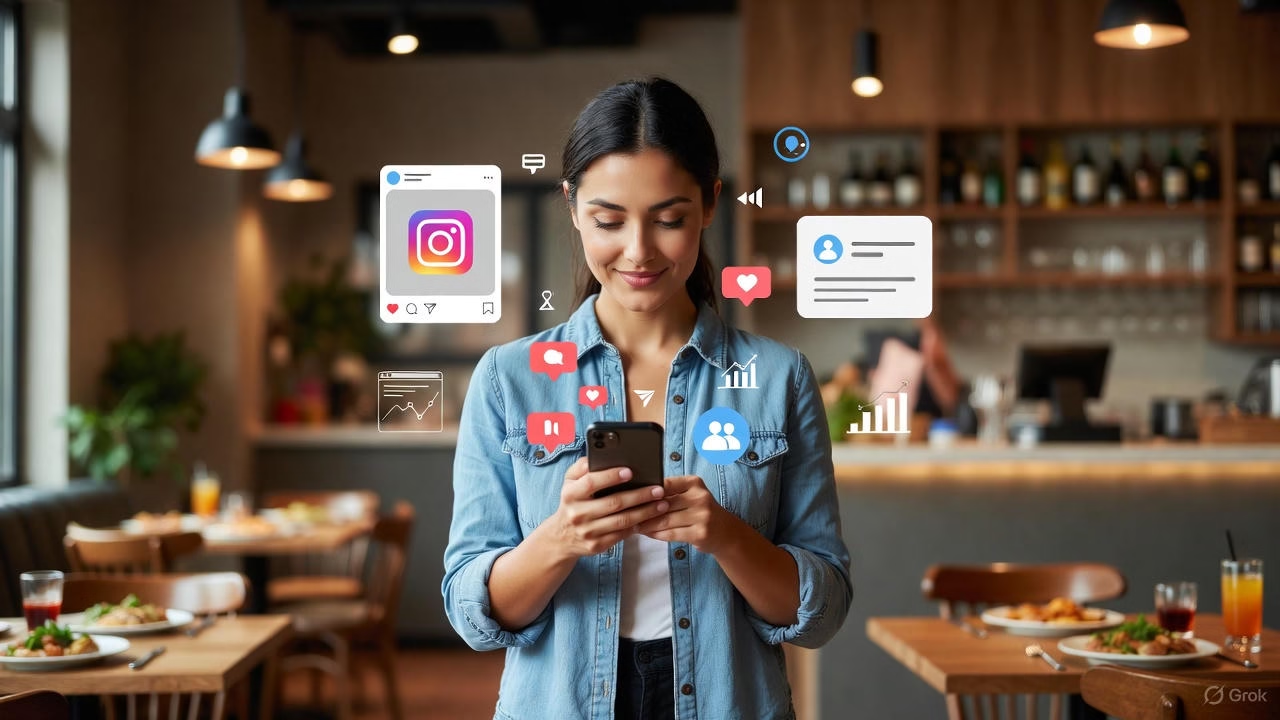
Introduction
These days, you rarely see large hoardings in cities, and even when you do, their numbers are much lower than before. Many products used to be advertised on those hoardings. You may wonder how this change happened. The answer lies in the rise of social media.
If you look closely, even print media carries far fewer advertisements now, except for government-sponsored ads that take up full pages. Have you ever thought about what this shift indicates? It’s the impact of the digital revolution.
In India, around 80 Crore people have mobile connections, and nearly 50 Crore of them have access to the internet. This is what drives the current generation. On top of that, social media plays a major role in keeping people engaged.
It is clear that marketing principles say you should place advertisements where your customers are and give them a chance to see you. When every other industry is moving in this direction, the restaurant industry won’t stay behind. Restaurants have also started using these platforms to attract and retain their customers.
In this article, we have tried to discuss how restaurants can use social media platforms effectively and get meaningful results from them. Leveraging social media is a cornerstone of modern restaurant marketing.
In today’s hyper-connected world, social media has become the lifeline of restaurant marketing. From creating brand awareness to driving online orders and increasing foot traffic, platforms like Instagram, Facebook, Threads, YouTube, and TikTok have transformed how restaurants engage with customers. With over 4.8 billion social media users globally, restaurants that fail to leverage these platforms risk falling behind their competitors.
This guide covers proven restaurant marketing tips for social media, practical examples, and actionable strategies that can help you attract, engage, and retain customers online. By the end of this article, you’ll have a comprehensive framework to grow your restaurant brand on social media and generate real business results. The future of restaurant marketing lies in adapting to changing consumer behaviors.
1. Why Social Media Marketing Matters for Restaurants
Social media marketing is essential for restaurants because it boosts visibility, drives customer engagement, and strengthens brand loyalty in today’s digital age. By leveraging platforms like Instagram, Facebook, and TikTok, restaurants can showcase their menu, share behind-the-scenes content, and interact directly with their audience, creating a more personal connection.
- Enhanced Visibility and Reach: Social media helps restaurants reach a wider audience by making their brand more discoverable through posts, hashtags, and shares. Positive reviews and user-generated content amplify this effect, turning satisfied customers into brand ambassadors who organically promote the restaurant to their networks.
- Customer Engagement and Loyalty: Regular interaction on social media—such as responding to comments, hosting giveaways, and sharing real-time updates—builds trust and fosters loyalty. Customers feel heard and valued, which encourages repeat visits and positive word-of-mouth.
- Cost-Effective Promotion: Compared to traditional advertising, social media marketing offers affordable ways to target specific demographics and run promotional campaigns, making it ideal for restaurants with limited budgets. Features like Facebook check-ins and Instagram stories further enhance engagement and help restaurants stand out from competitors.
- Real-Time Feedback and Improvement: Social media provides instant feedback from customers, allowing restaurants to address concerns, improve service, and adapt their offerings quickly. This responsiveness helps maintain high customer satisfaction and a strong online reputation.
- Brand Storytelling: Share your unique journey, chef’s story, or recipes to connect emotionally with audiences. Brand storytelling is a powerful way for restaurants to connect emotionally with their audience. Sharing your unique journey, the chef’s personal story, or even family recipes create a sense of authenticity and trust. When customers feel they are part of your restaurant’s narrative, they are more likely to become loyal patrons and advocates, sharing your story with friends and family.
- Driving Orders: Driving orders through social media has become seamless, with most restaurant apps and platforms now offering direct order links and reservation options on Instagram and Facebook. This convenience not only makes it easier for customers to order food or book a table but also increases conversion rates by reducing friction in the ordering process. Integrating these features helps restaurants capture more sales directly from their social media presence.
Social media is not just about posting—it’s about creating experiences that convert followers into loyal customers. Implementing effective restaurant marketing strategies can significantly enhance your establishment’s visibility and customer engagement.
2. Choosing the Right Social Media Platforms
Not all platforms work the same for every restaurant. The choice depends on your audience and goals. Choosing the right social media platforms is crucial for restaurant marketing, as each platform serves different audiences and content styles. Restaurants should focus on platforms where their target customers are most active, ensuring their content reaches the right audience and drives engagement and orders.
- Instagram: Best for visually appealing food content, reels, and influencer marketing.
- Facebook: Great for local community engagement, ads, and events promotion.
- YouTube: Ideal for storytelling, behind-the-scenes videos, and recipe tutorials.
- TikTok: Perfect for viral short-form content like food hacks or trending challenges.
- Threads and Twitter (X): Good for quick updates, amusing posts, and brand personality.
- LinkedIn: Useful for B2B marketing, partnerships, and showcasing your brand story to professionals.
A strong strategy often involves being active on 2–3 key platforms rather than spreading too thin. Understanding the nuances of restaurant marketing can help you connect with your target audience.
3. Create High-Quality Visual Content
Creating high-quality visual content is essential for restaurant marketing because it captures attention and showcases your food in the best possible light. Well-composed photos and engaging videos of your dishes, ambiance, and team can make your restaurant stand out on social media, attracting more likes, shares, and visits. Investing in good lighting, styling, and editing helps create a professional image that builds trust and entices customers to try your menu. Hence, visual storytelling forms the backbone of restaurant marketing on social media.
- Food Photography: Invest in professional food photos with good lighting and clean plating.
- Reels and Short Videos: Highlight cooking processes, plating techniques, or customer reactions in short, engaging clips of 15–30 seconds.
- Behind-the-Scenes Content: Showcase the chef at work, fresh ingredients, or daily kitchen life. This is an effective weapon for restaurant marketing.
- User-Generated Content: Repost photos taken by customers to build community trust.
Remember, authenticity is as important as aesthetics. Customers prefer real, relatable content over overly polished posts. For more understanding, read our article on ‘How Behind-the-Scenes Food Content Boosts Visibility & Engagement.’
4. Consistency is Key
Consistency is key in restaurant marketing on social media, as irregular posting can make your brand easy to forget and weaken engagement with your audience. Building a content calendar helps you plan and schedule posts in advance, ensuring a steady stream of updates that keep your restaurant top-of-mind for customers. Regular posting not only strengthens your online presence but also helps establish trust and reliability, making followers more likely to visit and recommend your restaurant.
Creating and sticking to a content calendar ensures consistent posting, which helps keep your restaurant top-of-mind for customers and strengthens your online presence. A well-planned calendar allows you to organize promotions, seasonal menus, and special events in advance, making your marketing efforts more effective and reliable.
- Post Frequency: 3–5 posts per week on Instagram and Facebook, 1–2 videos on TikTok or YouTube.
- Optimal Posting Time: Analyze your insights to see when your audience is most active.
- Mix Content Formats: Alternate between photos, reels, stories, polls, and carousels.
Consistency ensures your restaurant stays top-of-mind when customers decide where to eat.
5. Leverage Hashtags and Geo-Tags
Leveraging hashtags and geo-tags is a smart strategy for restaurants aiming to increase their social media reach and discoverability. Using relevant hashtags related to food, cuisine, and local trends helps your content appear in searches, attracting new customers who are interested in similar topics. Adding geo-tags ensures your posts show up for users searching in your area, making it easier for nearby diners to find and visit your restaurant. Together, hashtags and geo-tags boost visibility and drive foot traffic from both local and wider audiences.
- Use local hashtags like #DelhiFoodies, #NYCEats, or #KolkataCafe.
- Create a branded hashtag for your restaurant (e.g., #DineWithXYZ).
- Always tag your location on posts and stories to attract nearby customers.
This helps potential customers find your restaurant when searching for food in their area.
6. Run Social Media Contests and Giveaways
Running social media contests and giveaways is an effective way for restaurants to boost engagement and attract new followers. These activities encourage customers to interact with your brand by liking, commenting, sharing, or tagging friends, which increases your reach and visibility. Contests and giveaways also create excitement and incentivize visits, helping to generate buzz around your restaurant and drive both online and in-store traffic.
Giveaways are one of the fastest ways to increase followers and engagement.
Examples:
- “Tag 3 friends and win a free dinner for two.”
- “Share your best food photo at our restaurant using #DineWithXYZ to win vouchers.”
- “Guess our secret ingredient and get a free dessert.”
Make sure to partner with influencers or local food bloggers to maximize reach.
7. Partner with Food Influencers and Bloggers
Partnering with food influencers and bloggers is a highly effective strategy for restaurants, as these individuals hold significant influence over dining decisions and can introduce your brand to a wider audience. Their authentic reviews, posts, and stories can build trust and credibility, encouraging their followers to visit your restaurant. Collaborations with influencers not only increase visibility but also drive engagement and can lead to a surge in reservations and orders, making them a valuable asset in your restaurant’s marketing mix.
Food influencers hold massive sway in shaping dining decisions. Since the restaurant business is strongly shaped by local preferences such as taste, climate, and ethnic culture, restaurant marketing strategies should be designed around local choices. At the same time, local influencers usually have a stronger connection and better trust among local audiences. That is why investing in local influencers is often more effective than spending on larger, non-local bloggers.
- Invite them for tasting sessions and ask them to post reels/reviews.
- Offer exclusive discounts for their followers.
- Collaborate on special events like “Chef’s Table with XYZ Influencer.”
Micro-influencers (with 5K–50K followers) often drive higher engagement rates than bigger influencers. Innovative restaurant marketing practices can set you apart from competitors.
8. Encourage and Showcase Customer Reviews
Encouraging and showcasing customer reviews is a powerful way to build credibility and trust for your restaurant. Positive reviews act as social proof, reassuring potential customers that others have enjoyed their experience at your establishment. Featuring these reviews on your social media platforms not only boosts your reputation but also encourages more people to visit and leave their own feedback, creating a cycle of trust and engagement.
- Share Google and Zomato reviews on your social media stories.
- Create highlight reels featuring customer testimonials.
- Run “Review & Win” campaigns to encourage customers to leave reviews by offering them a chance to win freebies or exclusive rewards. This not only boosts your online visibility but also builds social proof, helping attract new diners and strengthen your restaurant’s reputation.
Reviews serve as trust-building content and encourage new diners. To see how customer experience proves a restaurant’s effectiveness, click here. It not only encourages new customers to visit but also serves as a powerful tool to build trust and create loyal customers, which lies at the heart of restaurant marketing.
Incorporating user-generated content is a powerful aspect of restaurant marketing. To gain a deeper understanding of the importance of customer feedback, read our article: ‘The Role of Customer Feedback in Shaping Dining Experiences: A Complete Guide.‘
9. Use Paid Advertising for Targeted Reach
Using paid advertising is essential for restaurants because organic reach on social media is often limited and unpredictable. Paid ads allow you to target specific audiences based on location, interests, and behaviours, ensuring your message reaches the right people at the right time. Combining paid advertising with organic efforts maximizes your visibility, drives more reservations and orders, and helps your restaurant stand out in a crowded digital landscape.
- Facebook & Instagram Ads: Target based on location, age, food interests, and behaviour.
- Boost Best-Performing Posts: Promote posts that already have high engagement.
- Retargeting Campaigns: Show ads to people who have engaged with your page but not yet visited.
Paid ads help you reach exactly the customers most likely to dine or order from your restaurant.
10. Tell Your Restaurant Story
Telling your restaurant story is essential because people don’t just buy food—they buy experiences and memories. Sharing your journey, values, and the inspiration behind your dishes creates an emotional connection with your audience, making your brand more relatable and memorable. When customers feel part of your story, they are more likely to become loyal patrons and share their positive experiences, helping your restaurant stand out in a competitive market.
- Post about your journey, why you started, and what makes your food unique.
- Highlight your chefs, staff, and suppliers.
- Share your community initiatives, like sustainability or local sourcing.
Storytelling humanizes your brand and strengthens loyalty. To learn more click here.
11. Engage with Your Audience
Engaging with your audience is crucial because social media is a two-way communication channel that allows restaurants to build meaningful relationships with their customers. Responding to comments, messages, and reviews shows that you value feedback and are attentive to your diners’ needs, which fosters loyalty and trust. Active engagement also encourages more interaction, making your restaurant feel approachable and customer-centric, ultimately leading to stronger brand advocacy and repeat visits.
- Reply to every comment and DM.
- Run polls and Q&A sessions in stories.
- Share customer posts and thank them publicly.
Engagement boosts algorithm visibility and shows customers you care.
12. Experiment with Trends and Challenges
Experimenting with trends and challenges is a smart move for restaurant social media marketing, as trending content has a higher chance of going viral and reaching a much larger audience. By participating in popular challenges or creating unique twists on current trends, restaurants can boost engagement, attract new followers, and keep their brand fresh and relevant. Staying up-to-date with social media trends also shows that your restaurant is dynamic and connected to its community, increasing the likelihood of shares and word-of-mouth promotion.
- Participate in trending TikTok or Instagram Reels challenges.
- Create your own unique food challenge (e.g., “Finish a 2kg burger in 10 minutes”).
- Use trending audio tracks to maximize reach.
Trend-driven content often earns more visibility than regular posts.
13. Showcase Seasonal and Special Menus
Showcasing seasonal and special menus is an effective way to boost restaurant engagement, as promotions tied to festivals, holidays, and events resonate strongly with customers. Highlighting limited-time dishes or festive offers creates urgency and excitement, encouraging diners to visit and try something new. By aligning your menu with special occasions, you tap into existing consumer interest and increase the chances of your content being shared and celebrated online.
- Launch special menus for Christmas, Diwali, or Valentine’s Day.
- Create limited-time offers and promote them heavily.
- Use themed food photos to align with festive moods.
This drives urgency and makes your restaurant more engaging.
14. Track Analytics and Optimize
Tracking analytics and optimizing your social media efforts is crucial because without data, your marketing strategies are essentially guesswork. By monitoring metrics such as engagement rates, reach, and conversion, restaurants can identify what content performs best and adjust their approach for better results. Regularly reviewing analytics helps you make informed decisions, refine your campaigns, and maximize the return on your marketing investment.
- Use Instagram Insights and Facebook Analytics to measure performance.
- Track engagement rate, reach, impressions, and click-throughs.
- Identify what content type (photos, reels, contests) works best and replicate it.
Data-driven strategies ensure you maximize ROI (Return on Investment) from your social campaigns. Utilizing analytics is key to measuring the success of your restaurant marketing efforts.
Conclusion
Social media is no longer optional for restaurants—it’s a powerful business growth engine that drives visibility, engagement, and customer loyalty. By choosing the right platforms, posting engaging visual content, collaborating with influencers, and running data-driven campaigns, restaurants can build a loyal online community and convert digital followers into real customers. Effective restaurant marketing can lead to increased foot traffic and online orders.
Review Tale helps restaurants review their own services, which alternately increases their online visibility and reputation. With a free platform for restaurant enlistment and storytelling marketing services, Review Tale empowers restaurants to share their unique journey, attract more loyal customers, and stand out in a crowded market. Encouraging and showcasing customer reviews further builds credibility, while consistent analytics tracking ensures marketing efforts are effective and results-driven. The restaurants that master social media marketing today, with the support of platforms like Review Tale, will become the household names of tomorrow.
Frequently Asked Questions (FAQs)
Which social media platform is best for restaurants?
Instagram is the most effective due to its visual focus on food, but Facebook is equally powerful for local community engagement. TikTok and YouTube work best for viral videos and storytelling.
Restaurant marketing strategies must evolve with the digital landscape.
How often should restaurants post on social media?
Ideally, restaurants should post at least 3–5 times a week on Instagram and Facebook, and once or twice weekly on TikTok or YouTube. Consistency is more important than frequency.
Engaging content is crucial for successful restaurant marketing on social media.
Should I invest in professional food photography?
Yes. High-quality visuals are critical in the food industry. Good photography makes dishes more appealing and increases engagement. Visual storytelling can enhance your restaurant marketing campaigns.
Do paid ads really work for restaurants?
Absolutely. Paid ads on Facebook and Instagram allow you to target customers based on location and interests, making them highly effective for driving footfall and online orders.
Utilizing targeted ads is a best practice in restaurant marketing.
How can I measure if my social media strategy is working?
Track KPIs like engagement rate, follower growth, website clicks, online orders, and reservations. Tools like Meta Business Suite, Hootsuite, and Sprout Social can provide detailed insights.
Continuous tracking of performance metrics is essential for optimizing restaurant marketing.