
 Bengali foods
 Best Mughlai
 Biryani
 Carrot Juice
 Chaat
Chaat Cheese Burger
 Chinese
 Cold Coffee
 Continental
 Cupcake
 Dessert
 Dinner
 Doughnut
 Drum Stick
 Fast Food
 Fresh Juice
 Gujarati Foods
 Homemade Meals
 Homemade Sweets
 Hot Dogs
 Ice Cream
 Indian Foods
 Italian
 Kebabs
 Lunch
Lunch Magi
Magi Noodles
 North Indian
 Pastry
 Pizza
Pizza Potato Fries
 Prawns
 Punjabi
 Salad
Salad Sham pane
 Shawarma
 South Indian
 Stakes
 Tandoor
 Tea
Tea Thai
Thai
Posted by Reviewtale
- Feb 13, 2026
- 70
- 0
The Impact of Online Reviews on Restaurant Success: Why Visibility Matters
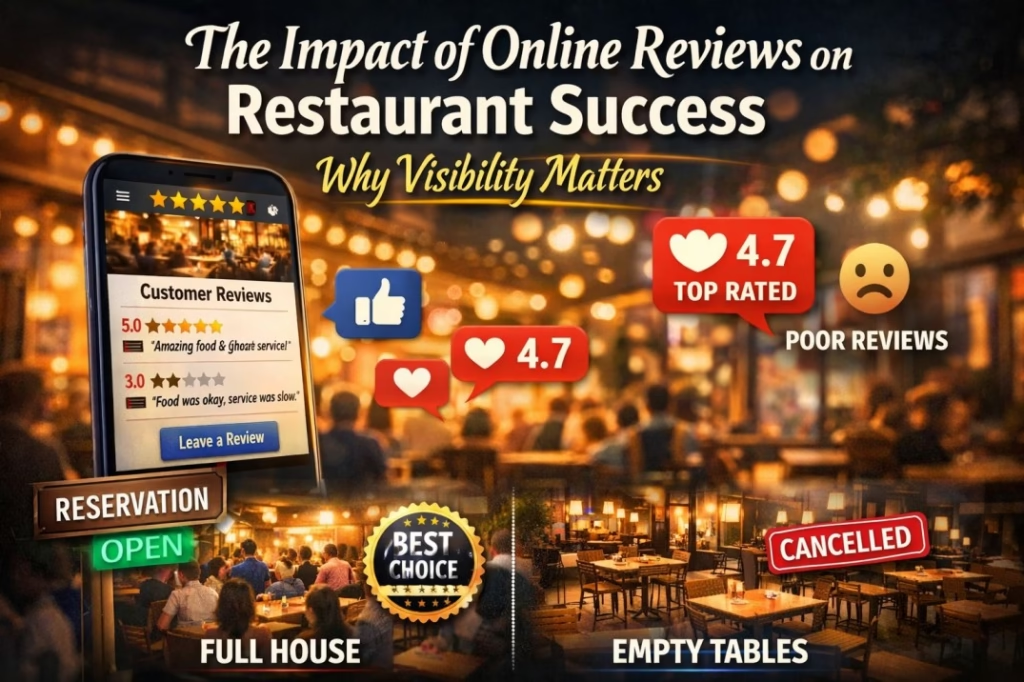
The Direct Connection Between Online Reviews and Restaurant Revenue
In the modern digital landscape, the impact of online reviews is no longer just a metric—it’s the heartbeat of a restaurant’s success. Before ever stepping through your doors, potential guests are likely scouring ratings, testimonials, and peer photos to decide if your menu is worth their time.
Today, a restaurant’s visibility on major review platforms does more than just fill tables; it serves as a primary driver for revenue growth, brand authority, and long-term sustainability. If you aren’t visible where people are looking, you’re essentially invisible to your next loyal customer.
Restaurants with a strong review presence consistently outperform competitors with limited or negative feedback. High ratings increase click-through rates, drive more reservations, and significantly improve walk-in traffic. The modern customer does not separate digital reputation from real-world quality; instead, they view reviews as a reflection of service standards, food consistency, and overall dining experience.
A restaurant’s digital footprint is now as important as its physical location. Prime real estate alone is no longer enough. Visibility in search results, maps, and review platforms determines whether potential customers even consider stepping inside.
Why Visibility on Review Platforms Determines Market Dominance
Visibility is not merely about being present online—it is about being prominent. When a restaurant appears at the top of search results with numerous positive reviews, it establishes immediate credibility. The psychology behind this is simple: consumers associate volume and positivity of reviews with trustworthiness.
Restaurants that consistently generate new reviews remain algorithmically favoured on platforms like Google and other review-based directories. Fresh feedback signals active customer engagement, which search engines interpret as relevance. This sustained visibility creates a cycle of growth:
- Higher rankings
- Increased exposure
- More customer visits
- Additional reviews
- Stronger authority
This compounding effect allows restaurants to dominate local search results and maintain competitive advantage. To gain a deeper understanding of this topic, please refer to our article: “5 Proven Ways Reviews Can Boost Your Restaurant’s Foot Traffic (2025).”
The Psychology Behind Customer Decision-Making
Customers rarely choose restaurants randomly. Instead, they follow a predictable decision path influenced by social proof. Online reviews function as modern word-of-mouth marketing, amplifying both positive and negative experiences.
When potential diners compare two restaurants, they assess:
- Overall star rating
- Number of reviews
- Recency of feedback
- Specific mentions of food quality
- Comments about service and ambiance
A restaurant with 4.6 stars and 500 reviews will almost always outperform a competitor with 4.2 stars and 40 reviews. Volume builds authority. Consistency builds trust. Specific praise builds anticipation.
Detailed reviews describing signature dishes, attentive staff, or memorable ambiance create emotional engagement even before the first visit. The impact of online reviews is seen clearly here, as this emotional connection directly increases conversion rates from search to reservation.

How Positive Reviews Strengthen Brand Identity
Online reviews do more than attract customers—they shape brand perception. Considering the significant impact of online reviews, when multiple customers highlight the same strengths, those characteristics become core brand attributes.
If guests repeatedly mention:
- Exceptional customer service
- Authentic flavours
- Clean and comfortable interiors
- Quick service times
These elements become associated with the restaurant’s identity in the public mind. Over time, the brand evolves through collective customer voice.
We must recognize that reputation is no longer controlled solely by marketing campaigns. It is co-created by customers through reviews. Restaurants that understand this dynamic encourage satisfied guests to share their experiences, reinforcing their strongest qualities.
Negative Reviews as Strategic Opportunities
Negative feedback, when handled strategically, becomes an asset rather than a liability. Restaurants that respond professionally and promptly to criticism demonstrate accountability and commitment to improvement.
A thoughtful response accomplishes three critical objectives:
- Reassures the dissatisfied customer
- Signals transparency to prospective guests
- Strengthens brand credibility
Consumers do not expect perfection. They expect responsiveness. A restaurant that addresses concerns respectfully builds more trust than one that ignores feedback altogether.
Furthermore, constructive criticism provides operational insights. Patterns in negative comments reveal areas requiring improvement, whether in wait times, food temperature, or service efficiency. Acting on these insights directly enhances customer satisfaction and long-term profitability. For more in-depth insights, please read our article: “5 Best Ways to Handle Negative Reviews.“
Search Engine Optimization and Review Signals
Search engines prioritize businesses with strong engagement metrics. Reviews influence local SEO performance in multiple ways:
- Increased keyword relevance within review text
- Higher click-through rates from search results
- Improved local map rankings
- Greater dwell time on listings
When customers describe menu items, location features, or dining experiences, they naturally incorporate keywords. This organic language strengthens search relevance without artificial optimization.
Additionally, restaurants with higher ratings experience better click behavior. Search engines interpret this as user satisfaction, further boosting ranking positions.
Visibility, therefore, is not accidental. It is earned through consistent engagement and review generation.
A restaurant’s online presence plays a crucial role in its overall success. With customers increasingly active online, businesses must establish a strong digital footprint to remain competitive. Free listings on relevant platforms offer small businesses an accessible and effective starting point.
Online reviews significantly influence credibility, particularly in the restaurant industry, by validating customer experiences and shaping perceptions. Review Tale provides a free listing platform that enables restaurants to manage operations seamlessly while enhancing their online visibility. To get enlisted with Review Tale, please click here.
Building a Sustainable Review Generation Strategy
Restaurants that thrive understand the importance of consistent review acquisition. A structured approach ensures steady growth in visibility and reputation.
Effective strategies include:
- Training staff to politely encourage feedback
- Placing review prompts on receipts
- Sending follow-up emails after reservations
- Using QR codes on tables
- Highlighting review links on social media
The key is authenticity. Reviews must be voluntarily written by genuine customers. Incentivizing feedback improperly damages credibility and risks penalties on review platforms.
A steady stream of authentic reviews keeps the restaurant’s digital presence dynamic and competitive.
The Role of Social Proof in Customer Loyalty
Online reviews not only attract new customers but also reinforce loyalty among existing patrons. When guests see their feedback acknowledged and appreciated, they feel valued. This emotional reinforcement encourages repeat visits.
Furthermore, public responses to positive reviews strengthen relationships. A simple acknowledgment demonstrates attentiveness and appreciation, deepening customer connection.
Over time, loyal customers become brand advocates. Their consistent reviews and recommendations amplify visibility and protect the restaurant from reputational fluctuations.
Competitive Analysis Through Review Monitoring
Monitoring competitor reviews offers strategic insight into market positioning. By analyzing competitor strengths and weaknesses, restaurants can identify opportunities to differentiate themselves.
For example:
- If competitors receive frequent complaints about slow service, prioritizing efficiency creates advantage.
- If others lack ambiance mentions, enhancing decor and atmosphere provides differentiation.
- If certain dishes receive exceptional praise elsewhere, menu innovation can address market demand.
This data-driven approach transforms review platforms into research tools, guiding strategic decisions and maintaining competitive relevance.
Mobile Search and Instant Decision Culture
Modern diners frequently make spontaneous decisions using smartphones. They search for “restaurants near me” and select options within seconds. In these moments, visibility and ratings determine immediate action.
A strong star rating combined with compelling review excerpts influences instant choice. Restaurants lacking visibility are excluded from consideration entirely.
This shift toward mobile-first decision-making emphasizes the urgency of maintaining optimized review profiles. Immediate impressions shape purchasing behaviour in real time.
Long-Term Brand Equity Built Through Reviews
Consistent positive reviews accumulate into long-term brand equity. Over months and years, they form a publicly accessible archive of customer satisfaction. This archive acts as a digital asset, strengthening credibility with:
- New customers
- Investors
- Delivery partners
- Event planners
A well-reviewed restaurant demonstrates operational stability and customer approval. This credibility supports expansion efforts, partnerships, and franchise opportunities.
Sustained visibility builds resilience against market fluctuations. Restaurants with established reputations recover faster from temporary setbacks because trust has already been secured.
Integrating Reviews Into Overall Marketing Strategy
Online reviews should not exist in isolation. They must be integrated into broader marketing initiatives. Highlighting testimonials on websites, social media, and promotional materials reinforces credibility.
Restaurants can:
- Share standout reviews in posts
- Feature customer testimonials on landing pages
- Incorporate ratings into advertisements
- Use review excerpts in email campaigns
This multi-channel amplification magnifies the impact of each positive experience, extending its reach beyond the original platform.
Review Tale offers comprehensive reputation management services tailored for restaurants. This service helps maintain a balanced market reputation by amplifying positive reviews across multiple channels and social media platforms, while alerting owners to negative feedback and providing actionable resolution strategies. To learn more, please click here.
Conclusion: Visibility Is the Foundation of Restaurant Success
The impact of online reviews on restaurant success is measurable, strategic, and undeniable. Visibility determines discovery. Discovery drives traffic. Traffic generates revenue. Revenue sustains growth.
Restaurants that actively manage their review presence secure stronger rankings, higher trust levels, and increased customer loyalty. In the competitive hospitality industry, digital reputation is not optional—it is foundational.
By prioritizing authentic engagement, responding thoughtfully, and consistently generating feedback, restaurants transform reviews into powerful growth engines. Visibility becomes leverage. Reputation becomes currency. And sustained excellence becomes the defining factor in long-term success.